
Have you heard the story of Karna?
If you have grown up with the Mahabharata — in any form, through any telling — you will know his name. The great warrior. The son of the Sun God. The most generous man in all of mythology. But knowing his name and sitting with his story are two different things. I have been sitting with his story for a long time.
This is not a retelling of the Mahabharata. It is an honest account of why one character in it has always disturbed me — and why I think that disturbance is worth examining.
Who Karna Was
Karna was born to Kunti — then known as Pritha — before her marriage to King Pandu. His father was Surya, the Sun God. But Kunti, afraid of the shame of being an unwed mother, placed her newborn son in a basket and set him afloat on the river.
He was found by Adiratha, a charioteer in Hastinapur. Adiratha and his wife Radha raised the boy as their own son and named him Vasusena. He was also called Radheya — son of Radha. The woman who chose him. The woman who raised him.
He would spend his entire life not knowing who he truly was.
What Always Disturbs Me
Something about Karna’s life has always unsettled me. I hesitate to call it sympathy — sympathy feels too small for what his story provokes. It is something closer to recognition. A quiet, persistent awareness of how profoundly unjust a life can be — even a life lived with extraordinary courage and generosity.
His life is the clearest illustration I have encountered of the role of destiny. Not destiny as comfort — as the reassurance that everything happens for a reason. But destiny as weight. As something that moves through a life regardless of the choices made within it. No matter how good or bad, how righteous or unrighteous a person is — what is destined finds its way.
I am a firm believer in destiny. And Karna’s story is why.
The Life He Was Given
Consider what Karna’s life actually contained.
He was a prince by birth — the firstborn son of Kunti, which made him the eldest of the Pandavas — but he was raised as a charioteer’s son. His lineage was hidden from everyone, including himself.
When he sought training from Dronacharya, he was refused. Not because he lacked ability — he had extraordinary ability — but because he was not considered a Kshatriya. So he trained under Parashurama instead, concealing his identity to gain access to the knowledge he deserved. And for this concealment he was cursed — at the moment of his greatest need on the battlefield he would forget all the knowledge required to wield the Brahmastra.
The earth itself was cursed to swallow his chariot wheel at the crucial moment.
He was not allowed to enter the battlefield at Kurukshetra until Bhishma fell — because Bhishma knew his lineage and understood what that meant for the war.
And through all of this — the exclusions, the curses, the insults at different phases of life — Karna did not know why. He did not know he was a Kshatriya. He did not know he was a Brahmin. He did not know he was the son of Kunti. He carried the weight of a hidden identity without even knowing the identity was hidden.
Not knowing who you are is its own particular kind of pain. To be insulted for something you cannot explain. To be barred from something you deserve. To work twice as hard to prove yourself in a world that has already decided what you are — without telling you why.
The Question of Duryodhana
When Karna was publicly humiliated at Dronacharya’s tournament — dismissed, insulted, denied the right to compete — it was Duryodhana who stepped forward. Who recognised Karna’s abilities. Who gave him a kingdom and bestowed upon him the status he had been denied. Who called him an equal when everyone else called him lesser.
This friendship is always celebrated in retellings of the Mahabharata. And it was real — there is no reason to doubt that Karna genuinely loved Duryodhana and that Duryodhana genuinely valued Karna.
But I find myself returning to a quieter question: did Karna ever fully recognise that Duryodhana’s friendship — however genuine — was also bound to his enmity with the Pandavas? That Karna’s value to Duryodhana was inseparable from Karna’s position as the greatest weapon against the Pandavas?
Was Duryodhana a true friend? Or was he the right person at the right moment — and did Karna, in his gratitude and his loneliness, perhaps not ask that question clearly enough?
A decision taken in a weak moment can determine the course of a life. Karna’s acceptance of Duryodhana’s friendship — taken in a moment of public humiliation, of desperate need for recognition — may have been that decision.
I do not say this to judge him. I say it because I recognise it. The longing to be seen and valued is so powerful that when someone finally offers it we do not always ask what it will cost.
What Karna Did Not Know Until the End
The truth about Karna’s identity was revealed to him before the Kurukshetra war — but barely. Kunti came to him then. She told him who he was. The eldest Pandava. Her firstborn son.
And even in that moment — even having been given back the identity that had been taken from him at birth — Karna made a promise that I find extraordinary. He promised Kunti that she would still have five sons at the end of the war. He would not kill any Pandava except Arjuna. Because he understood by then that his fate was already written, and he would walk toward it with the same generosity he had always carried.
At his last moments even the Divine — in the form of a Brahmin asking for charity — came to take what remained. And Karna gave. Because giving was the one thing in his life that had always been entirely his own choice.
And after all of it — after every injustice, every curse, every exclusion, every moment of being less than he was — he was given the sight of the Lord in his Universal form.
What His Life Means to Me
People say — what more could anyone want than to see the Lord? And they are right. Nothing surpasses that.
But what was Karna’s fault? His hidden identity was not his doing. He was set adrift on a river as an infant. He spent his entire life trying to become who he was — training, fighting, giving — without ever being told the full truth of where he came from.
He trained to be the best archer and the greatest warrior. He gave without condition his entire life. And still — destiny moved through him the way it does, indifferent to effort or virtue.
Karna’s life reminds me, every time I return to it, that nothing is truer than destiny. Not as resignation. Not as an excuse to stop trying. But as a framework for understanding that some things are written before we arrive — and that what we put into our lives, even within those constraints, still matters.
I return to his story most often when I am trying to make sense of something in my own life that refuses to make sense on its own terms.
There is a quote I have always carried with me:
We are not permitted to choose the frame of our destiny — but what we put into it is ours.
Karna put everything into it. Courage. Generosity. Loyalty. A warrior’s dignity even in defeat.
The frame was not fair. What he put into it was extraordinary.
Have you also ever felt as if nothing is making sense no matter what you put into it and yet you keep trying? I am here to listen to you
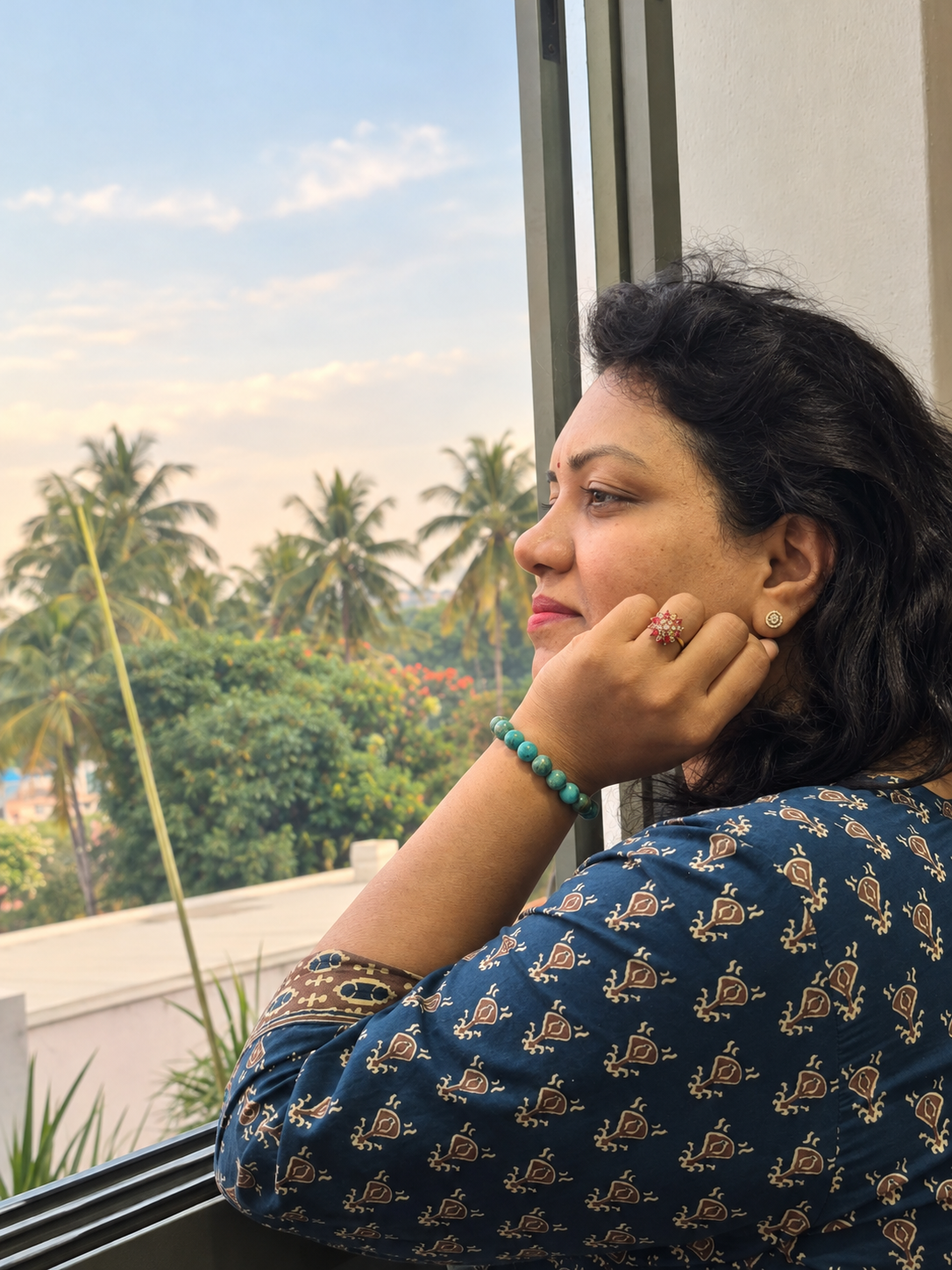
Writing from the middle of a life still in progress. Read my story
An essay every other Friday, directly into your inbox
No account needed.