
If I could give my daughter one gift — not a thing, not an experience, but something that would stay with her through every season of her life — it would not be a good education, though that matters. It would not be a loving marriage, though I wish that for her too.
It would be financial independence.
Her own money. Earned by her own hands. In her own name.
What Nobody Told Me
I grew up being told to be financially independent. The advice was there. The intention was good. But somewhere between moving countries, raising children, running a home, caring for parents, and the endless list of things that needed doing — it never quite worked out that way.
Somewhere along the way I chose home. In the fullest sense of that word — not just the house, but everything it contained and everyone it needed. I do not regret that choice. But I have learnt its cost the hard way.
Some things can be taught. Others life teaches you — slowly, through experience you did not sign up for, in ways that leave a mark. And rebuilding, when you finally begin, takes more out of you than anyone warns you it will.
Nobody told me that financial dependence is a quiet erosion Nobody told me that by the time you look up and notice, the gap between your financial reality and your sense of self has become very wide.
Nobody told me that one day I would sit in a country that was not mine, with skills that were mine, and still feel like a guest in my own financial life.
I am not telling my daughter this to frighten her. I am telling her because I wish someone had told me — not just the advice, but the whole truth of it.
What Money Actually Gives You
Money is practical. Of course it is. It pays for things, provides security, keeps the lights on and the children fed.
But money — your own money, specifically — gives you something beyond the practical. Something that is harder to name but immediately recognisable to any woman who has had it and lost it or never had it at all.
It gives you a voice.
Not the loud kind. The quiet kind. The kind that means when you speak in a room — in your home, in your marriage, in your family — your words land with a different weight. The sort that means you can disagree without fear of what disagreement costs you. The manner that means you make choices — real choices, not managed ones — about your own life.
Money gives you the right to occupy space without justifying your presence in it.
The Masked Imbalance
In many marriages — loving ones, functional ones, ones that work in most ways — there exists a quiet imbalance when one person earns and the other does not. There is an unspoken talk in their minds how things should work.
It does not announce itself. It lives in small moments. In the slight hesitation before asking for something. In the calculations that happen before a decision — not practical calculations, but psychological ones. In the gradual narrowing of what feels like yours to want or claim or insist upon.
The person who earns does not always intend this. The person who does not earn does not always notice it happening. But it shapes the texture of daily life in ways that are real and cumulative.
Financial independence does not guarantee a perfect marriage or a perfect life. But it means you come to the table as an equal. That what you bring — your presence, your labour, your love — is a choice you make freely. Not a necessity you endure.
To My Daughter
I am writing this for my daughter. She is seven years old and does not yet know what financial independence means. But someday she will. And I want her to hear this from me before the world teaches her a harder version.
You know that money buys things, that some things cost more than others, that there is a card that makes purchases happen.
But someday you will understand what I am trying to say.
Earn your own money. Not because marriage is unsafe or love is unreliable. But because having your own ground — your own income, your own account, your own professional identity — means you always have somewhere to stand. Regardless of what life brings.
Study what genuinely interests you. Build skills that are yours. Take your career seriously — not more seriously than your family, but not less seriously either. Do not put it entirely aside during the difficult seasons, even when the difficult seasons are long.
The world will tell you in many ways — some subtle, some not — that a woman’s worth is located in her relationships. In being a good wife, a good mother, a good daughter. These things matter and I am not dismissing them. But they are not the whole of you. And they cannot be your only source of value in a world where money determines so much of how we are seen and heard and treated.
Be good at something that the world pays for. Value your skills enough to charge for them. Do not underestimate what you bring professionally simply because other parts of your life feel more urgent.
What I Know Now
Financial independence is not about wealth. It is not about earning more than your partner or prioritising money above everything.
It is about having enough ground of your own that you can stand on it. That you can make choices freely. That your voice in your own life carries the weight it deserves.
It is about never having to choose between your dignity and your security.
I want both for my daughter. I want her to love deeply and be loved well. I want her to build a family if that is what she chooses and a career that means something to her. I want her life to be full.
And I want her, always, to have her own money. In her own name. Earned by her own hands.
Because that — quietly, practically, undramatically — is what makes everything else possible.
What would you tell your daughter — or your younger self — about financial independence? I would love to hear your thoughts.
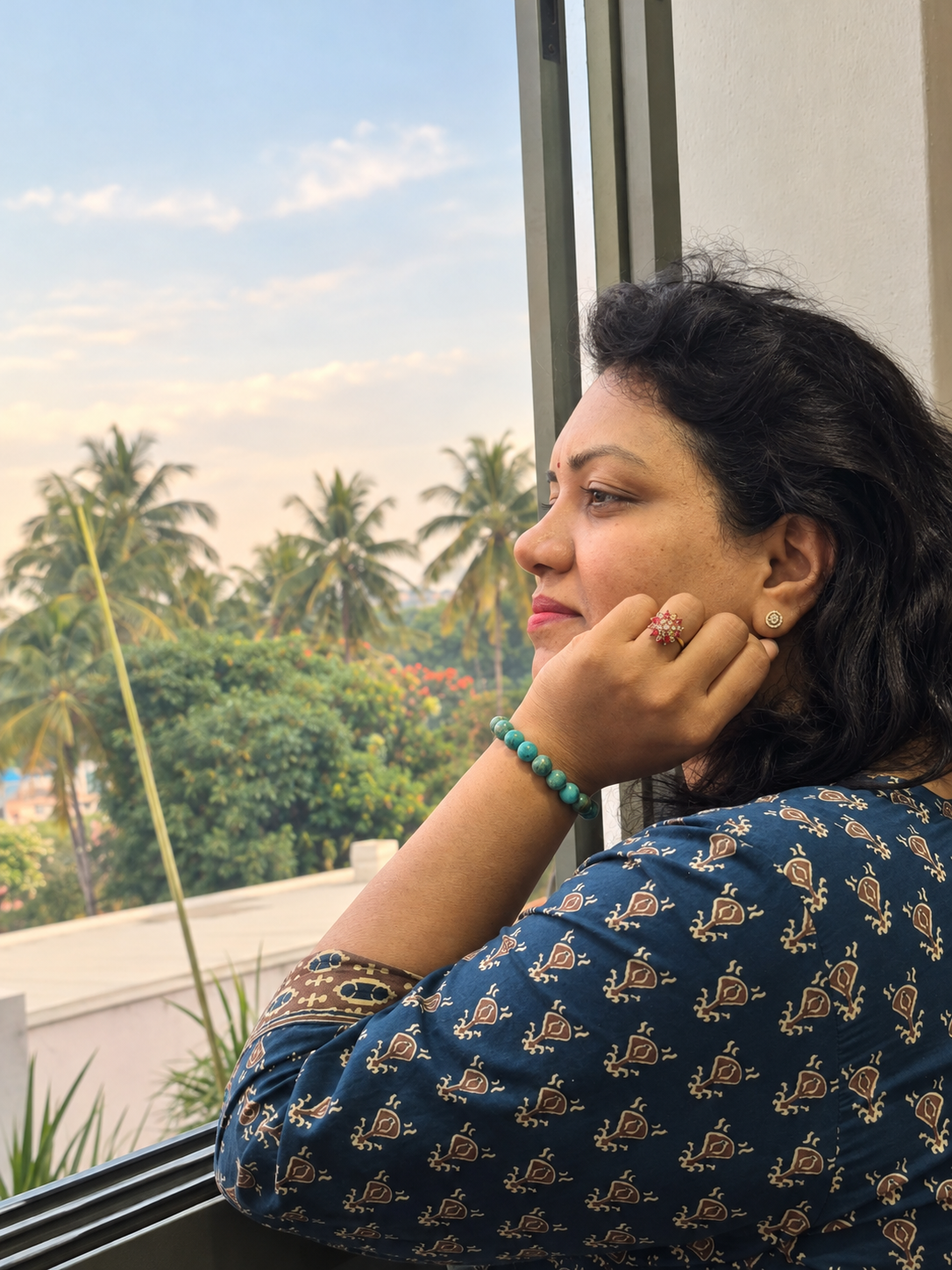
Writing from the middle of a life still in progress. Read my story
An essay every other Friday, directly into your inbox
No account needed.
Pingback: Dependency Is a Trap. Even the Loving Kind. - Skymusings
how can you even write awesome words 👏 🙌 ❤️
Reading your article filled me with pride and emotion. I admire the depth of your thoughts and the honesty with which you express them.
At the same time, as your mother, reading about your struggles and experiences made me reflect deeply. I always believed I had raised you with love, care, and the best values I knew. So, when I read about the challenges you have faced, my heart felt heavy, and I wondered if there was more I could have done for you.
But more than anything, I am proud of the strong, thoughtful, and independent woman you have become. Your writing is meaningful, insightful, and touches the heart.
Keep writing, keep growing, and keep sharing your voice with the world. My love, blessings, and admiration are always with you.
With love,
Amma ❤️